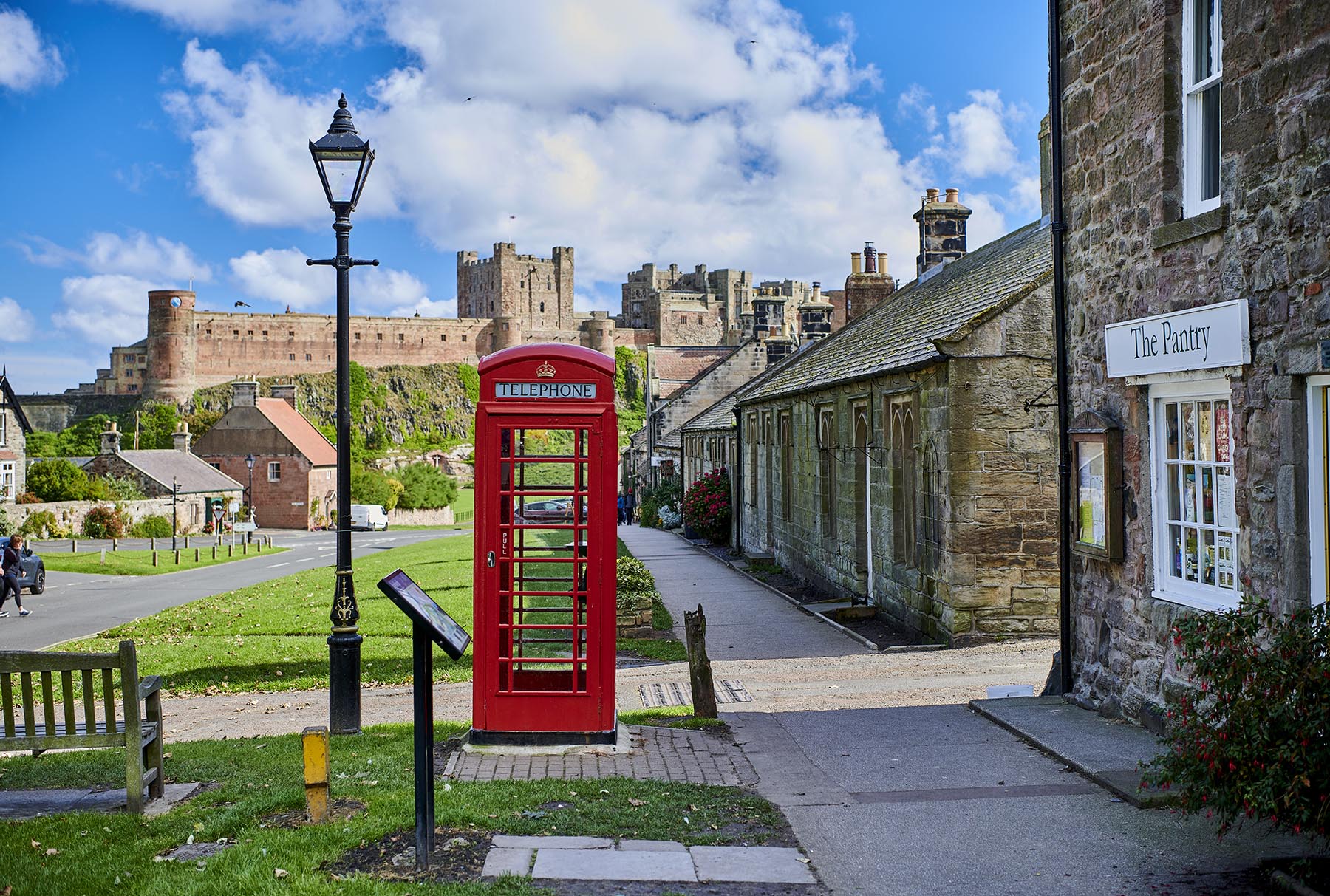
Our North East Region
For great days out in unspoilt beauty. For heritage, culture and new adventures.
Three counties; one region
Our North East is a region of history and beauty. It includes the counties of:
- Northumberland
- Durham
- Tyne and Wear
From dramatic castles to quaint market towns, breathtaking beaches to wild moors, there’s so much to explore.
Hop on a bus or take a train out of Newcastle to visit our best-known attractions and discover some of our best-kept secrets.
Did you know...
- The iconic Angel of the North sculpture is seen by one person every second – that's 86,400 people a day or 31.5 million a year. It’s also taller than New York’s Statue of Liberty.
- Northumberland is England’s most northern county. It’s all that remains of the ancient kingdom of Northumbria which was once the largest, most powerful kingdom in Britain.
- The North East’s shipbuilding heritage was recognised by UNESCO in 2013 and included in its Memory of the World Register alongside the Domesday Book.
- The world’s first passenger railway service opened in the North East in 1825. The Stockton to Darlington line was designed and built by ‘Father of the Railways’ George Stephenson and his son, Robert.
- Football’s first World Cup was won by an amateur team of local miners from West Auckland in County Durham.
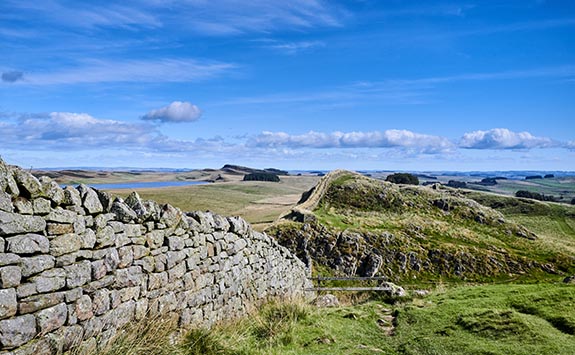
Hadrian’s Wall
Stretching for 73 miles across Britain, Hadrian’s Wall formed the north-west frontier of the Roman Empire; one of the greatest empires in history. Made an UNESCO World Heritage Site in 1987, some of the best surviving sections of the Wall can be found in Northumberland.
- Housesteads - Britain’s most complete Roman fort near Haltwhistle
- Vindolanda - a military base and frontier outpost for over 300 years. The Vindolanda Writing Tablets, one of Britain’s top treasures, were found here
- Chesters - a cavalry fort near Hexham for elite Roman troops
Fantastic fortresses
Northumberland has more castles than any other county in England with over 70 castle sites. Among the best to visit are:
- Alnwick Castle & Garden – striking Alnwick Castle starred as Hogwarts in two Harry Potter films. Its garden contains one of the world’s largest treehouses, a unique Poison Garden of deadly plants, and a magical village called Lilidorei. It also has the world’s largest collection of ‘Taihaku’ – Japanese flowering cherry trees that you can visit when in bloom
- Lindisfarne Castle – built on Holy Island, the birthplace of Christianity in northern England. The castle can only be reached at low tide via a causeway from the mainland
- Bamburgh Castle – a royal dwelling for over 1,200 years, the castle was destroyed in the War of the Roses. Rebuilt and used as a pharmacy, hospital and coastguard station, it was later bought and renovated by industrialist Lord Armstrong – our Armstrong Building on campus is named after him. The castle overlooks one of the best beaches in northern England
- Dunstanburgh Castle – overlooking the North Sea it’s one of the most atmospheric castles in England. The castle’s dramatic silhouette is said to have inspired famous English landscape painter JMW Turner
Great outdoors
Northumberland National Park
Home to England's cleanest rivers, clearest air and darkest skies. It has the largest Dark Sky Park for stargazing in the UK. Covering over 400 square miles, it’s an outdoor playground for:
- walks
- rock climbing
- mountain biking
- horse riding
- wild goat spotting
Notable sights include:
- Hadrian’s Wall - some of the most spectacular sections run through the park
- Kielder Water – the biggest manmade lake in northern Europe
- Kielder Forest – the largest working forest in England. Every year one of Kielder’s 150 million spruce trees is chosen to be London’s official Christmas tree and stand at the foot of Big Ben
- North Pennines Area of Outstanding Natural Beauty - one of the most unspoilt places in England. A landscape of international geological significance and a UNESCO Global Geopark, it stretches for over 700 miles. Explore a wilderness of heather moorlands, wooded valleys, rare wildlife and charming villages.
Coastal wonders
Northumberland’s coastline is dramatic, diverse, breathtaking and surprising. Follow the 62-mile Northumberland Coastal Path of striking landscapes and historic places to see:
- Amble - a quaint fishing town
- Warkworth - best known for its ruined medieval castle
- Alnmouth - a coastal village with pastel-coloured houses strung along the River Aln as it meets the North Sea
- Seahouses - the gateway to the Farne Islands. Take a boat trip to this National Nature Reserve and Site of Special Scientific Interest. You can see 200,000 seabirds, including 43,000 pairs of puffins, in their natural habitat
Town trips
Top towns to visit include:
- Hexham - an historic market town with an impressive Abbey
- Morpeth - it once held its very own Olympic Games
- Haltwhistle - it claims to be at the geographical centre of Britain
- Corbridge - more a village than a town, it was an important Roman supply base and settlement. The Corbridge Hoard was discovered here. It is one of the most remarkable Roman finds of the past century
- Rothbury - a scenic market town best known for National Trust property Cragside. It was the first house in the world to be lit by hydroelectricity. It’s set in an estate featuring grand fantasy gardens
- Berwick-upon-Tweed - for over 400 years it was fought over by English and Scottish forces. Captured, controlled, sacked and traded time and again, it’s currently England’s most northern town
Durham city
Take the train from Newcastle and you’ll be wandering the cobbled streets of Durham city in less than 15 minutes. At its heart is Durham Cathedral and Castle, designated a UNESCO World Heritage Site.
- Durham Castle - the former home of the Prince Bishops of Durham for hundreds of years. Appointed by William the Conqueror, the bishops could mint their own coins, levy taxes, raise their own army and establish their own court
- Durham Cathedral - the largest and finest example of Norman architecture in England. A place of worship and pilgrimage for over 1,000 years. It has featured in Hollywood blockbuster Avenger’s Endgame and starred as Hogwarts in the Harry Potter films
Durham’s dales
Part of the North Pennines National Landscape. The dales feature moorlands, hills, and valleys dotted with ancient towns and villages. Among the best places to visit are:
- Barnard Castle – an historic market town. Its Bowes Museum features over 58,000 works of art, including paintings by El Greco and Goya
- Raby Estates – including the 14th century Raby Castle and its 200-acre deer park. The castle’s walled gardens feature a grass amphitheatre and a series of mazes
- High Force - a dramatic 21-metre waterfall created where the River Tees crosses the Whin Sill. This vast sheet of rock, up to 80m thick, was formed 295 million years ago and lies beneath much of north-east England
- Bishop Auckland – home to Auckland Palace built for the Prince Bishops of Durham and featuring a throne room for these ‘kings of the North’. The palace forms the backdrop for Kynren, an outdoor spectacular that traces 2,000 years of UK and North East history
Durham’s coast
Durham’s Heritage Coast - a coastline of dramatic cliffs, sweeping beaches and rich grasslands. Take the 11-mile coastal footpath that follows England’s longest National Trail, the King Charles III England Coast Path.
You can:
- explore beautiful bays and headlands with their rare plants and wildlife
- gaze out across the North Sea to spot visiting minke whales and harbour porpoises
- imagine yourself on a film/TV set. Blast Beach in Dawdon was used in Alien 3 and featured in The Last Kingdom
Birth of the railway
Travel into history with the Stockton and Darlington railway, the world’s first passenger railway to use steam engines.
Opened in 1825, the 26-mile line was designed and built by ‘Father of Railways’ George Stephenson and his son, Robert. It heralded the creation of a modern railway system that would spread around the globe.
Today you can:
- explore the history and legacy of that first railway journey at the Hopetown Museum in Darlington
- visit railway museum Locomotion in Shildon. It features the largest undercover collection of historic railway vehicles in Europe
Living museum
World-famous open air museum Beamish is a top 20 most-visited attraction in England (VisitEngland 2025).
Set in 350 acres of beautiful countryside, it tells the story of life in North East England across the 1820s, 1900s, 1940s and 1950s.
You'll have the opportunity to:
- explore a pit village, colliery, town and farm
- go down a drift mine
- hop on a tram and travel through time
- walk down the streets and visit the shops that featured in global TV sensation Downton Abbey
Sunderland
Natives of Sunderland are known as Mackems. Thought to mean ‘make em’, it refers to the shipbuilders who turned the city into arguably the world’s largest shipbuilding centre.
The nickname is also linked to fans of Premier League side Sunderland Football Club.
Take the Metro from Newcastle to enjoy some top things to see and do in Sunderland including:
- Keel Line - trace the names of the 8,100+ ships launched on the River Wear that have been etched into the city's pavements
- Sunderland Empire - catch a show or London West End touring production at this grand Edwardian theatre
- Roker Beach - shop, eat out, or stroll along this award-winning beach and its pier built to protect Sunderland’s harbour
- Museum and Winter Gardens - learn more about Sunderland’s maritime heritage. Discover its glass and pottery industries, and explore a tropical glasshouse paradise of 2,000 plants.
The Sunderland borough has its fair share of landmarks and monuments, but two of the best to visit are:
- Penshaw Monument - perched on top of Penshaw Hill, this 70-foot-high monument is a replica of an ancient Greek temple. Visit on a clear day to enjoy its spectacular views
- Washington Old Hall - this historic manor house is the ancestral home of the family of George Washington, America’s first President. Although George never lived here, five generations of his direct ancestors did
Gateshead
Located across the River Tyne from Newcastle, Gateshead is best known for:
- Metrocentre - a mega mall of 270 stores, plus restaurants and cafés. Entertainment includes a multi-screen cinema, arcades, climbing zone, and escape rooms
- Angel of the North - designed in steel by artist Antony Gormley. It stands at 20 metres tall, has a wingspan of 54 metres and weighs 208 tonnes
- The Glasshouse - this International Centre for Music has won prestigious architectural awards and brought some of the biggest names in music to the town
- BALTIC - a converted flour mill. It houses four floors of art, two viewing decks, a café, shop, library, sensory room and rooftop restaurant
- Millennium Bridge - the world's first tilting or 'winking eye' bridge. A visit to Gateshead wouldn't be complete without walking across it to reach Newcastle's Quayside
- Parks and open spaces - follow easy walking trails along Derwent Walk and through Chopwell Woods, or picnic in Saltwell Park. The Georgian park and gardens at Gibside were designed by a coal baron
North Tyneside
For the closest beaches to Newcastle hop on the Metro to Tynemouth, Whitley Bay and Cullercoats.
- Tynemouth Priory - once a rich and powerful monastery. Explore the remains of the medieval church and its castle and enjoy sweeping views across the sea and King Edward’s Bay
- Longsands beach - stroll along the mile-long sandy beach and explore Tynemouth’s Grand Parade. Eat at a beach-front café or get takeaway fish and chips, sunbathe, swim or surf. There’s also an aquarium, park and shops
- Tynemouth’s Victorian station - every weekend it becomes an indoor market selling arts, crafts, vintage finds and street food
- Whitley Bay - popular for its golden sandy beach that stretches for two miles. This seaside town also has a restored Edwardian pleasure dome called Spanish City
- St Mary’s Lighthouse - an iconic landmark that guards the hazardous coast north of Whitley Bay. Reached by a short causeway, it overlooks a nature reserve of rockpools, clifftop grassland, beach and wetland habitats
- Cullercoats - a sheltered bay tucked between Tynemouth and Whitley Bay. Once a thriving fishing village, it’s the home of our Dove Marine Laboratory
- Segedunum - a UNESCO World Heritage Site. This Roman fort at Wallsend was built at the eastern limit of Hadrian's Wall. It includes an interactive museum, full-scale reconstructions of a Roman bath house and a section of the Wall
For over 200 years life in North Shields revolved around shipbuilding. One of its biggest yards, Swan Hunter, built some of the greatest ships of the early 20th century. These included:
- RMS Carpathia - which rescued survivors from the RMS Titanic
- RMS Mauretania - which held a 20-year record for the fastest Atlantic crossing
At its peak the yard employed 14,000 workers. In 1904, it founded Wallsend Boys Club for its young apprentices. During the club's history it's produced over 90 professional footballers. Among them is Alan Shearer, one of the Premier League's all-time top strikers.
South Tyneside
A smaller conurbation than its North Tyneside neighbour, there's still plenty to do on this side of the River Tyne. Head for the biggest coastal town, South Shields, to:
- visit the UNESCO World Heritage Site of Arbeia, a Roman fort and military supply base
- explore the National Centre for the Written Word, a library, exhibition and cultural venue that's been designed to look like the fanned out pages of a book
- enjoy seaside attractions including a funfair and park
- climb to the top of Souter Lighthouse and learn about the life of a lighthouse keeper. This coastal landmark was one of the first lighthouses in the world to be purpose-built to use electricity
North East England: The spirit of innovation
The North East has always been a hotbed of brilliant ideas and pioneering inventions. From matches to lightbulbs, the joystick to Lucozade. Our inventors have lit up, and powered up, the world!
The friction match
Stockton chemist John Walker accidentally discovered that a stick coated with certain chemicals burst into flame when scraped across his hearth. Just like that, the friction match was born. Walker sold 250 boxes of matches but refused to patent his discovery. His invention was copied and improved by others to create safer, more effective matches.
The windscreen wiper
Whitley Bay’s Gladstone Adams was driving home after a football match when he hit on the idea for a windscreen wiper. He patented his invention, but it was never manufactured. You can still see his prototype at the Discovery Museum in Newcastle.
The National Grid
Newcastle’s Charles Merz designed Wallsend’s Neptune Power Station. It was the first in the world to use a three-phase electrical power distribution system and to supply electricity to industry. Merz helped shape the UK’s National Grid. He was known as the ‘Grid King’.
The joystick
Early aviator Arthur George from Heaton invented a single control column to handle an airplane’s three rotational movements; roll, pitch and yaw. It’s regarded as the first joystick, and the forerunner of every aircraft and games console joystick used today.
Lucozade
Newcastle chemist William Walker Hunter (trading as William Owen & Son), invented Glucozade. A carbonated water and glucose drink for people who were ill, it was bought by pharmaceutical company Beecham’s and rebranded as Lucozade.
At Newcastle University, we’re continuing to push the boundaries of knowledge with our world-class research.