Teaching and Learning
For an award-winning experience. For industry-informed degrees. For a high-quality education.
Shaping your future success
We don’t just want you to achieve your potential, we want you to go beyond it.
Our world-leading research, industry connections and best teaching practice will be at the heart of your university experience at Newcastle. Your learning will be relevant and focused on the future of work. You’ll gain the skills, knowledge and experience needed for your career and the world you’ll live in.
The high quality of teaching and the impact of the University's research is reflected in QS World University Rankings, with a place in the top 140 institutions.
Teaching Excellence
There’s a long tradition of excellence in teaching at Newcastle University.
Our high-quality teaching, learning and outcomes for our students are assessed by the UK government in the UK Teaching Excellence Framework (TEF). We hold a TEF silver award (2023), as well as 5 QS Stars for Teaching (2025).
We’re ranked 34th in The Times and Sunday Times Good University Guide 2026. A number of our subjects were also ranked in the guide, with 9 featuring in the top 10. The guide evaluates everything from teaching quality and student experience to degree completion rates and graduate prospects.
Learning Experience
When you join Newcastle University, you'll become a part of an inspiring learning community made up of fellow students and our academic staff.
Gifted educators, including National Teaching Fellows recognised for their teaching excellence, will nurture your curiosity and your confidence as you learn.
Your study experience will be shaped by the research specialisms of our pioneering academics, and links with national and multinational industries. These industry partners contribute to our curriculum development, putting you at the forefront of industry-ready skills.
We will challenge you and empower you to reach your full potential, during study and once you graduate. Exactly how you will learn at Newcastle depends on your subject. Find out about the different ways we teach in the sections below.
Lectures
A lecture is a presentation from an academic expert to a large group of students. They will introduce you to a topic and share their expert knowledge.
You'll be directed to additional information – online or in the library – and leave with great ideas so you can study the topic further.
Many lectures are recorded by our recording system, ReCap. This means you have the chance to listen to the lecture again, which you'll find helpful when revising, or if there is anything you have not understood at the time.
Seminars
A seminar is a small meeting of students from the same degree, led by a tutor.
You'll engage in lively discussions about lecture material and your personal research; challenge your preconceptions and develop new ideas.
You will develop a deeper understanding of particular subjects and develop your skills in communication, presentation and problem-solving.
Fieldwork and field visits
Fieldwork and field visits are a great way for you to apply what you've learned in a practical way or allow you to observe and learn from professionals working in your chosen area.
Locations vary from a visit to industry to an archaeological dig and may include residential locations abroad.
You will normally be expected to keep a record of your learning in the field through a field diary, portfolio, coursework or field presentation.
Practical work
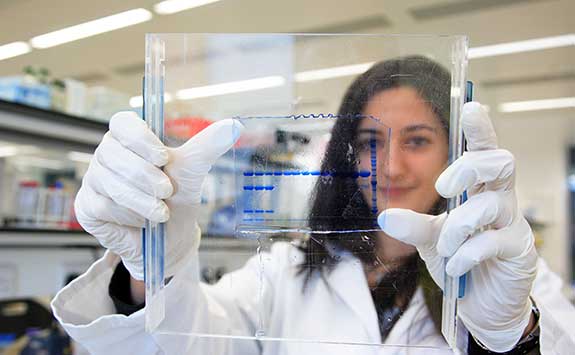
You can get hands-on experience using industry-standard equipment and techniques, to help prepare you for your future career.
Practical work encompasses a wide range of teaching including:
- laboratory work
- artefact handling
- science- or engineering-based lab classes
- problem-based classes in a wide range of disciplines
- IT workshops
You'll be able to take advantage of our specialist facilities and bring what you've learnt in the classroom to life.
You can take a virtual tour of many of our academic facilities.
Self-directed study
During your time at university, you'll grow as a critical thinker and be able to communicate and evaluate opinions and ideas.
Independent learning is an important part of your Newcastle University experience. It helps you develop independent thought, problem solving, research skills and organisation. These skills appeal to a wide range of employers and are one of the reasons top employers recruit our graduates.
Our degrees are designed to allow you to take greater responsibility for your learning at each stage.
You will have increasing freedom of choice over what modules you study as your course progresses. A major self-directed project in your final year relies on you using your own initiative to plan and carry out research in an area of particular interest to you.
Private study is essential beyond your scheduled teaching hours and set assignments. You will need to be proactive with further reading, seeking out study materials beyond the set texts on your reading list.
I have been able to apply theory and strategy to real case studies and my professors have pushed the boundaries of my critical thinking. Their expertise not only enhances my understanding but also inspires me to contribute to my own field of study.
Carson
Marketing and Management BSc (Hons)